Re-Entrant Totality
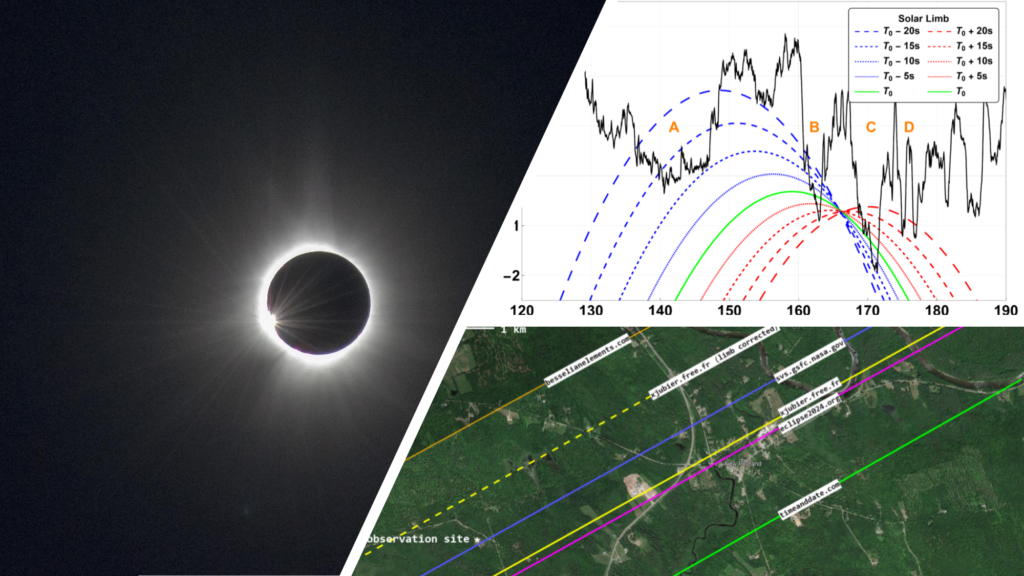
Is it possible for totality to be disrupted? The common understanding of total solar eclipses is that when the eclipse becomes total at second contact, it remains as […]
Re-Entrant Totality Read more »
Is it possible for totality to be disrupted? The common understanding of total solar eclipses is that when the eclipse becomes total at second contact, it remains as […]
Re-Entrant Totality Read more »
A remarkable observation The following post by Jillian Culver on the Solar Eclipse Chasers Facebook page caught our attention as it describes, rather in detail, an intriguing observation
A Prolonged Observation of the Outer Corona from Outside the Path of Totality Read more »
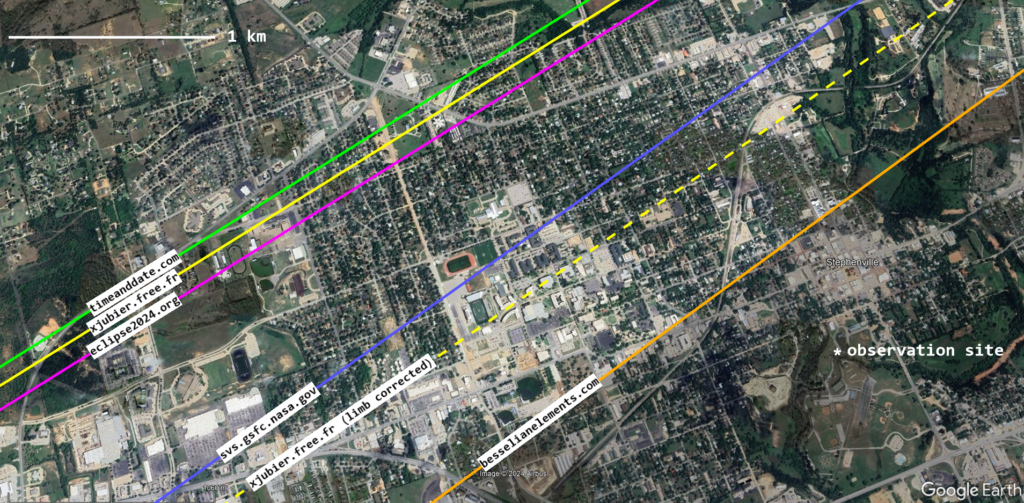
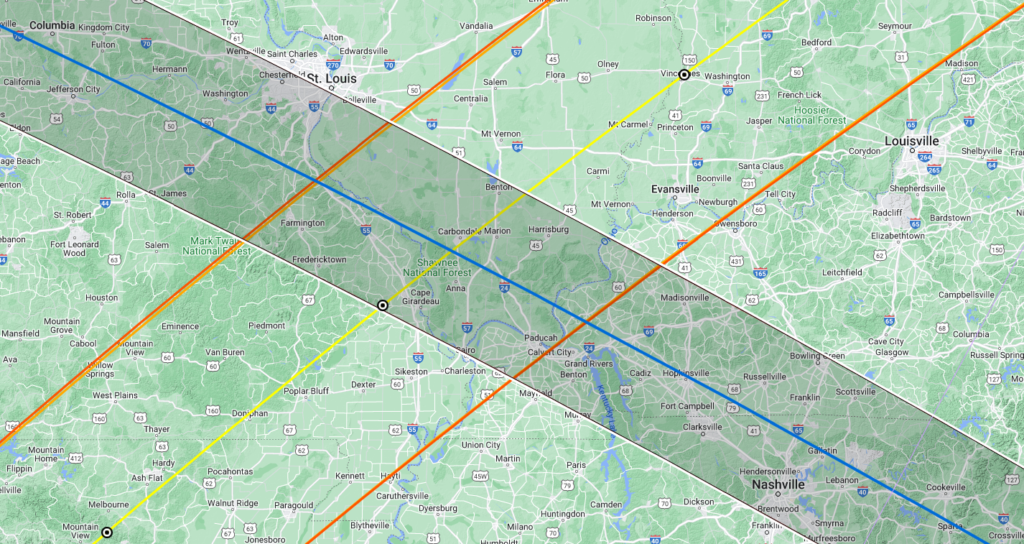
Several online sources provided eclipse maps for the 2024 April 8th total solar eclipse. All these maps show the location of the umbral shadow path limits. Close inspection
Experimentally Testing Eclipse Maps Accuracy Read more »
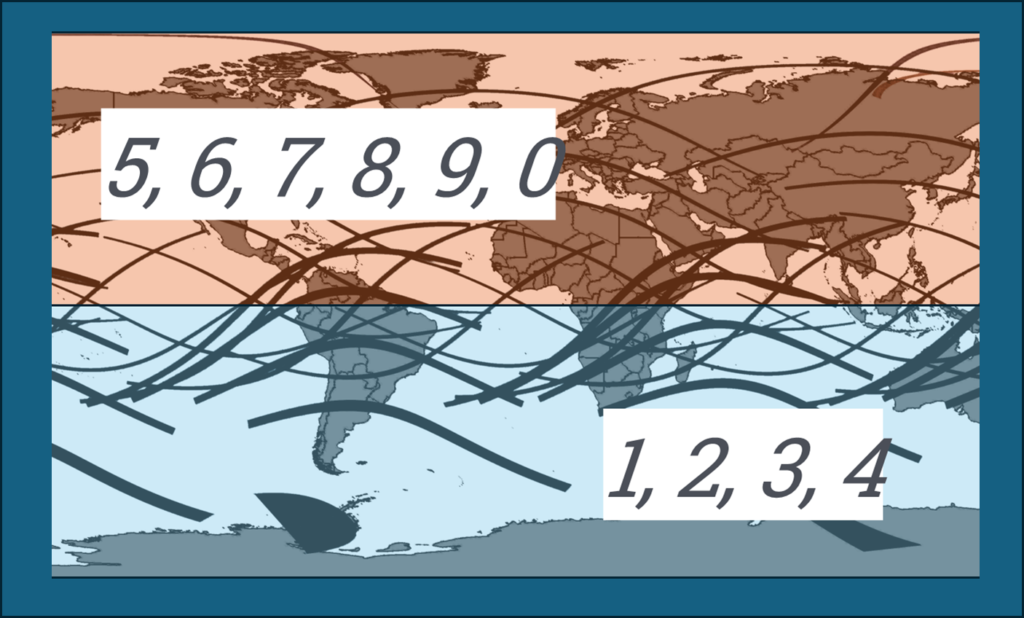
The “rule” The following empirical “rule” to determine the hemisphere of visibility of a total solar eclipse was recently mentioned on the Solar Eclipses Mailing List (SEML): To
Total solar eclipse hemisphere of visibility: an empirical “rule” and why it works Read more »
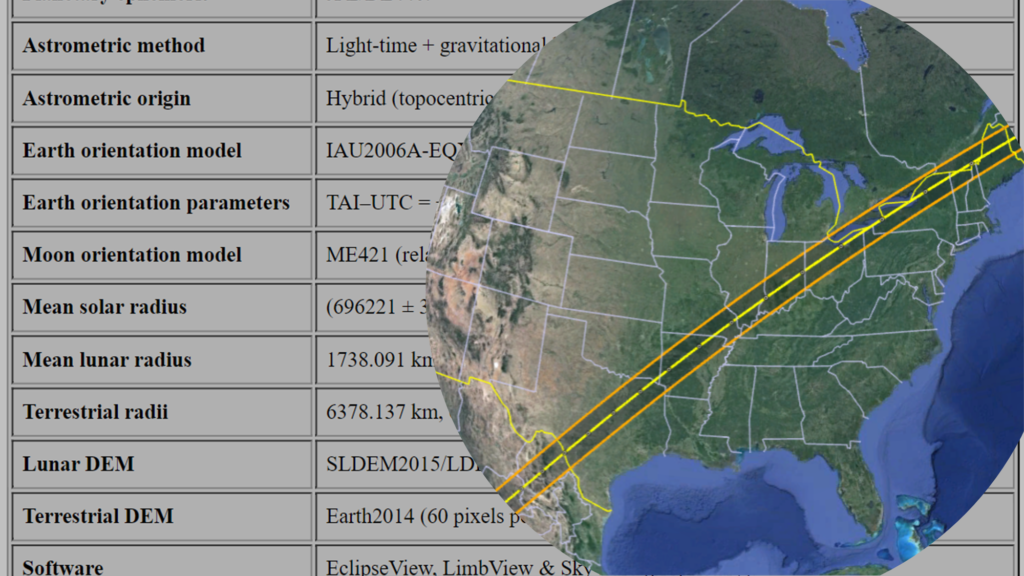
Technical Details of the true-limb Eclipse Path Determination Much interest has been generated by the precise map of the path of the 2024 April 8th Total Solar Eclipse
Technical Details of the true-limb Eclipse Path Determination Read more »
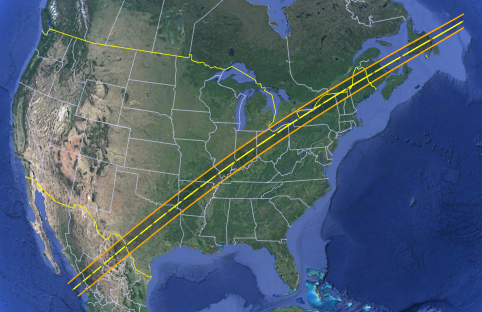
Path of the 2024 April 8th Total Solar Eclipse – by John Irwin The position of the umbral shadow path across North America has been accurately determined by
Path of the 2024 April 8th Total Solar Eclipse Read more »
The average time span between totalities from a given place is ca. 375 year, with a minimum just under 6 months and the longest and maximum of ca.
Time span between totalities from a given place Read more »
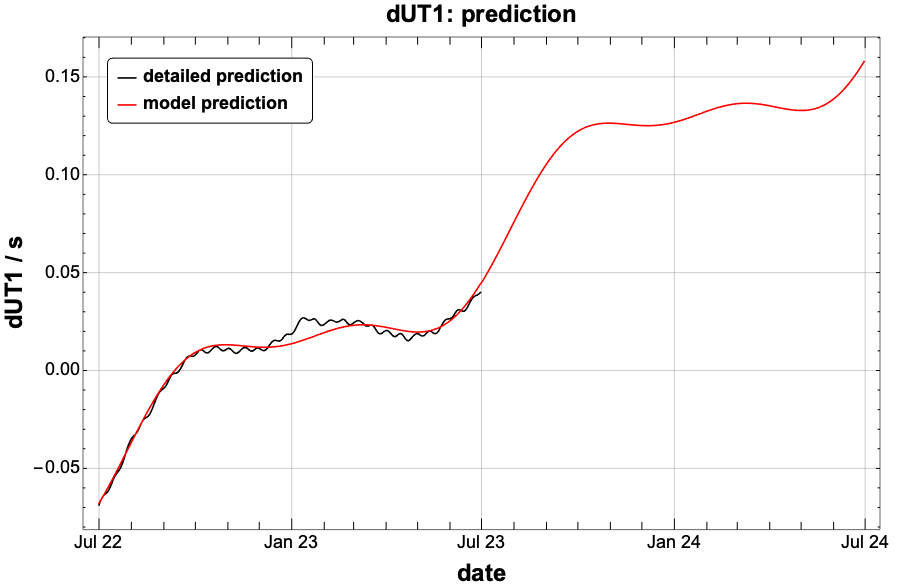
IERS has just announced that no leap second will be inserted into UTC at the end of December 2022 (https://datacenter.iers.org/data/latestVersion/16_BULLETIN_C16.txt). The number of inserted leap seconds (since the
Leap second, dUT1 and future eclipses Read more »
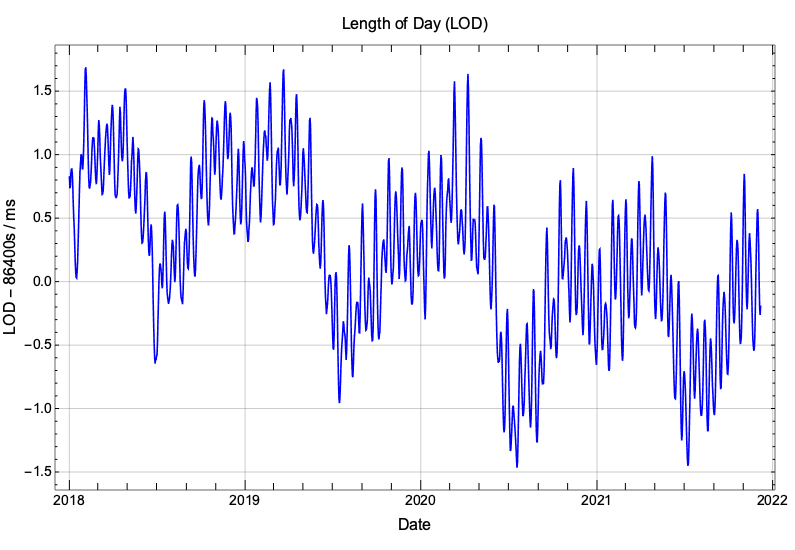
The Earth’s rotational rate is ever changing, due to a series of factors, mainly the effect of tidal friction caused by the Moon and the effect of the
Leap Second: will there be one before the 2023 AT eclipse? Read more »
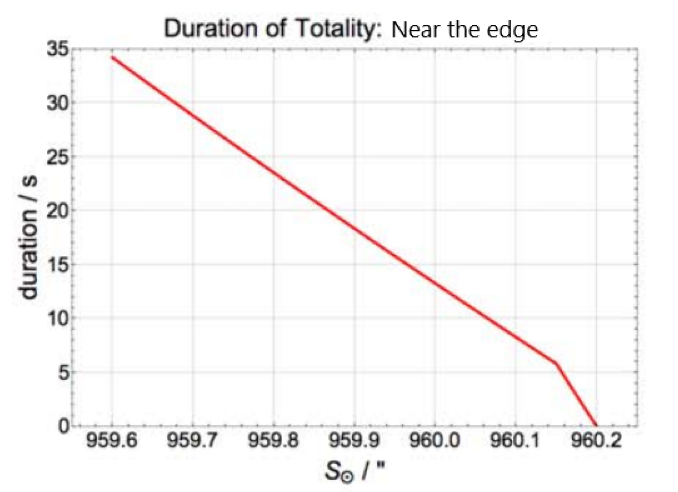
Dependency on the value of the solar radius of eclipse duration (2017 August 21st total solar eclipse – from Vale, Oregon) The value of the solar radius at
The solar radius and its impact on eclipse computations Read more »
This article provides the description of an experimental technique to accurately time internal contacts, applied to the Total Solar Eclipse of Nov 3rd 2013.